Start With The Power Requirement
A generator removal needs an agreed power strategy before the equipment moves. A set that appears unused may still support life safety systems, communications or other essential loads. Establish what it supplies, whether the backup function is still required and who can approve its retirement.
The replacement programme is often the controlling dependency. If a new set must be commissioned first, removal belongs after the relevant testing and acceptance. If the building is being vacated, the facilities team still needs to confirm that no retained service depends on the old installation.
Our enquiry route covers commercial generator removal in Bristol, including associated fuel-storage questions. Explain whether you need the generator only removed or a wider clearance of day tanks, bulk tanks, exhaust components and redundant ancillary equipment. A defined boundary helps the receiving contractor assess the whole job.
Map The Equipment Before Pricing
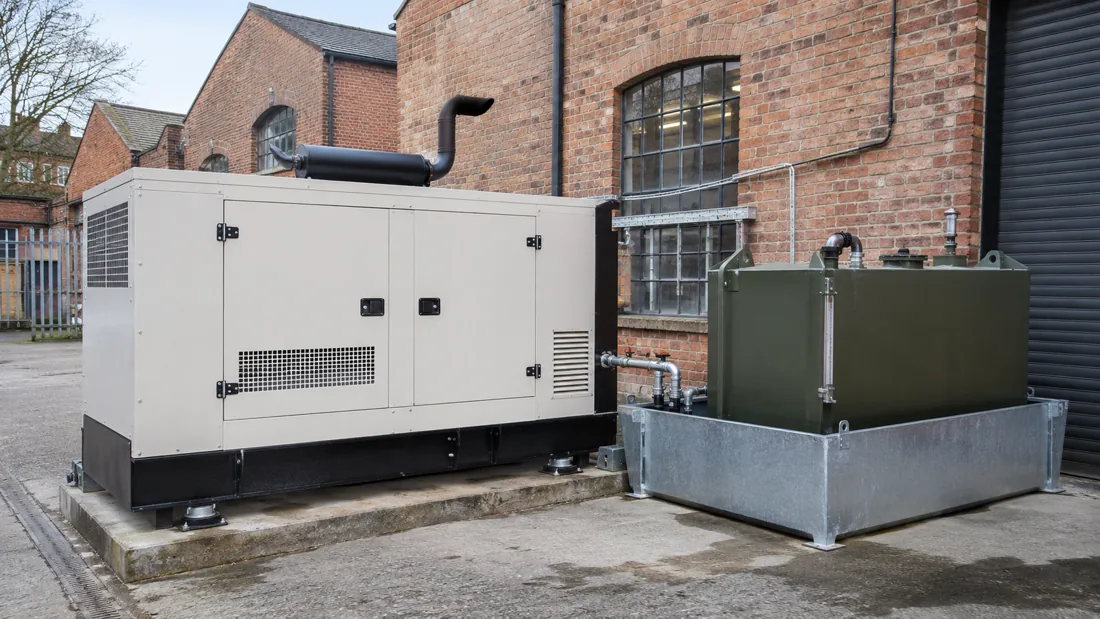
Generator installations differ in ways that affect both preparation and handling. A canopy-enclosed set in an open yard presents different access issues from equipment inside a plant room. A sub-base fuel tank also changes how residual fuel and the assembly's weight are approached.
Send the manufacturer and model, a photograph of the data plate if safely accessible, and any available dimensions or lifting information. Do not guess the weight from electrical output. Accurate equipment information helps determine whether dismantling, a crane lift or another handling arrangement is appropriate.
Identify cables, exhaust routes, cooling arrangements, starting batteries and separate fuel supplies for assessment by the relevant competent trades. These are interfaces to coordinate, not instructions for site staff to disconnect equipment. The method should make clear which contractor owns each isolation and sign-off.
Electrical And Fuel Isolation Interfaces
Removal cannot start on the assumption that switching the generator off makes all connected systems safe. A competent electrical contractor needs to manage and verify the electrical isolation under the agreed site procedure. Automatic starting arrangements and other energy sources must be considered in that professional plan.
Fuel connections require their own assessment, especially where a day tank is supplied from a separate bulk tank. State whether the bulk storage is staying in service, being transferred to replacement equipment or also being decommissioned. Shared lines and pumps should be identified before work is scheduled.
Arrange access to the people who control site permits and building systems. If the electrical contractor is appointed separately, include its attendance and written release in the removal programme. Clear interfaces prevent a vehicle arriving before the equipment can actually be released for handling.
Fuel, Fluids And The Disposal Route
Remaining diesel affects the work even when the generator has not run recently. Provide an estimated level in the day tank and any connected bulk tank. Fuel may be recoverable if its condition and receiving storage are suitable, while contaminated product needs assessment for disposal.
Engine fluids, batteries and other components also need appropriate handling. They should not be treated as one undifferentiated scrap load. The receiving route depends on the condition and classification of the equipment and materials, with reuse or recovery considered where appropriate.
Be clear whether you are asking for disposal or transfer to another destination. Moving a set for potential reuse does not establish that it is ready to operate elsewhere. Inspection, servicing, installation and commissioning at a receiving site are separate matters that need their own agreement.
Bristol Access And Lifting Constraints
The route out should be assessed from the equipment footprint to the collection vehicle. Photograph narrow doors, turns, ramps and any point where the equipment passes through an occupied area. Include overhead obstructions and nearby plant that cannot be moved.
A lifting plan depends on verified equipment information and the actual lifting position. Ground conditions, vehicle access, underground services and available standing space can all affect the approach. HSE's lifting guidance requires operations to be properly planned by competent people, appropriately supervised and carried out safely.
Tell us whether yard traffic needs to continue, loading bays must stay open or noisy activity has restricted hours. A night or weekend window can alter staffing and logistics. For building work, agree who protects finishes and whether openings, lifting beams or reinstatement are included in the removal package.
Decision Guide, Cost And Records
Choose generator removal when the power function has been formally retired or transferred and you need the equipment physically cleared. If only the fuel system is redundant, a tank decommissioning scope may be more appropriate. If poor running is the concern, diagnosis and fuel assessment may avoid retiring serviceable equipment.
Cost depends on weight, dimensions, location, isolation interfaces, remaining fluids and the intended destination. Dismantling ancillary systems, specialist lifting and making good the building are separate cost drivers. Ask whether the quote includes the pad, exhaust penetrations and redundant cabling, rather than assuming a completely empty room.
A useful enquiry includes the Bristol-area postcode, model, photographs, access dimensions, fuel estimate and replacement programme. Add the named electrical contact and any landlord approvals. Say whether the target is collection, disposal or a cleared plant-room footprint.
At handover, retain isolation confirmation from the relevant contractor, equipment identification, a completion record and the applicable waste or transfer documentation. If the fuel tank is also removed or filled, request its records separately. These details help close the correct assets in the building's maintenance register.
Generator Removal Questions
Can The Fuel Tank Stay In Place?
A generator fuel tank may stay in place if its future use or decommissioning method is assessed separately. Removing the engine does not make the storage redundant equipment safe. State whether you want the tank retained, removed or considered for filling so the scope covers fuel, connections and final records.
Does Removal Include Electrical Disconnection?
Electrical disconnection must be explicitly included or assigned to a separate competent contractor. The quotation and programme should identify who verifies isolation and releases the set for removal. Tell us about automatic starting, replacement equipment and any essential loads so these interfaces can be considered before a collection date is agreed.